How Can Reiki and Reflexology Support Health and Wellness?
Reiki and reflexology can support health and wellness by helping your body move into a calmer, more restful state.
While they don’t replace medical care, they may help reduce stress, ease tension, encourage relaxation, and support a greater sense of balance.
Reflexology uses targeted pressure on areas of the feet, hands, or ears, whereas Reiki uses gentle touch or near-body hand placement to support relaxation and energy balance.
When used as part of a whole-person wellness approach, Reiki and reflexology may help you slow down, notice what your body needs, and create space for rest and recovery.
Key Takeaways:
- Reiki and reflexology are supportive wellness therapies, not replacements for medical care.
- Reiki is a gentle energy-based practice that may help support calm, balance, and emotional ease.
- Reflexology uses targeted pressure on the feet, hands, or ears to support relaxation and body awareness.
- Both therapies may be helpful for people dealing with stress, fatigue, muscle tension, caregiving demands, or busy schedules.
- A whole-person wellness plan may include medical care, lifestyle support, and restorative therapies that help the body rest and reset.
Stress doesn’t always stay in the mind. And for many people, it shows up in the body.
You may notice tighter shoulders, shallower breathing, poor sleep, headaches, digestive discomfort, or even fatigue.
When these things start happening, that’s when people start looking for ways to support relaxation and whole-body wellness.
Reiki and reflexology are two holistic therapies that are often used for this kind of support.
They’re different practices, but both center around relaxation, balance, and restoring your body’s natural ability to rest.
These are not replacements for medical care, and they don’t diagnose disease, cure health conditions, or replace a physician’s guidance.
Instead, they can be part of a broader wellness approach for people who want support that addresses more than one symptom at a time.
In any case, understanding what these therapies are, how they differ, and what to expect can help you decide whether you might benefit from them.
With that in mind, this article explores what Reiki and reflexology are, how they work, what you can expect from these treatments, and who can benefit from them.
What Reiki and Reflexology Are
Reiki and reflexology are both gentle wellness practices, but they work in different ways.
Reflexology uses targeted pressure on specific areas of the feet, hands, or ears. In traditional reflexology, these areas are understood to correspond with different parts of the body.
The goal is not to diagnose or treat a specific medical condition. It’s to support relaxation, encourage a calming response, and help your body release tension.
Reiki, on the other hand, is an energy-based practice that is often used to support relaxation, emotional ease, and a sense of balance. During a session, the practitioner may place their hands lightly on or near your body, while you remain fully clothed and rest comfortably.
Some people are drawn to reflexology because they like the physical nature of pressure work, while others are drawn to Reiki because they want a gentle experience with little physical stimulation.
Both practices invite the body to slow down, and for someone who has been carrying a lot of stress for a long time, that can feel incredibly meaningful.
How Reflexology Works in a Wellness Setting
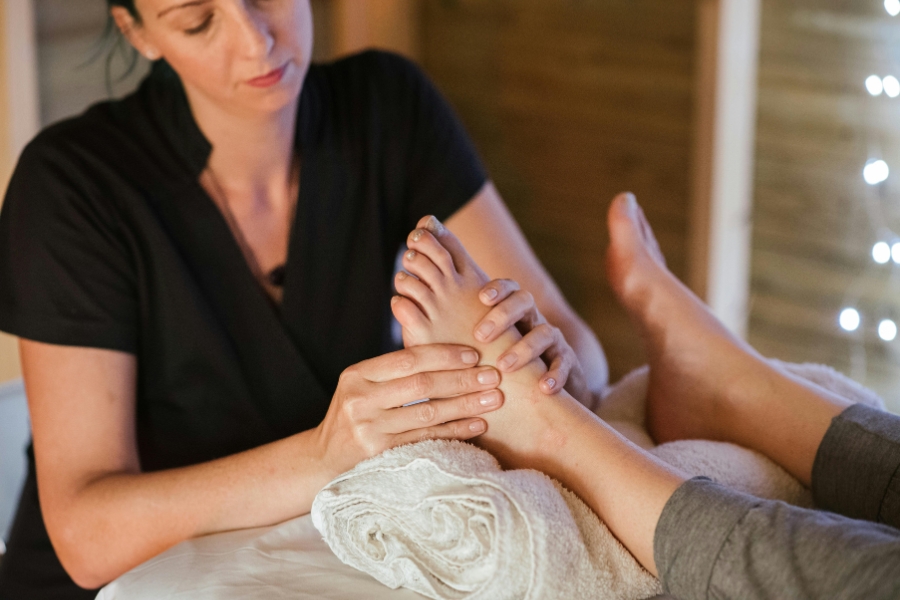
Reflexology most often focuses on the feet, although the hands and ears may also be used. The practitioner applies pressure to specific points using their fingers, thumbs, or hands.
The pressure should feel intentional, but not painful.
Some areas may feel tender, especially if you carry tension or have been under stress. But whatever the case, a trained practitioner will adjust the session to your comfort level.
Many people seek reflexology because they feel physically tense or depleted.
They may spend long hours standing, caring for others, working at a desk, or managing a demanding schedule, and over time, the body can begin to feel tight, heavy, or disconnected.
During a session, the repeated pressure and focused touch may help support relaxation.
Some people feel their breathing slow down, while others notice warmth, heaviness in their limbs, or a release of tension they didn’t realize they were holding.
Reflexology is often described through a traditional framework that connects areas of the feet, hands, and ears with the rest of the body.
This is not to be confused with medical diagnosis or treatment, but many people still find the experience helpful because it brings their attention back to their body in a calm, structured way.
At any rate, when you’re busy, stressed, or focused on other people’s needs, you may stop noticing what your body is trying to tell you
But reflexology can help you slow down enough to recognize where you feel tension and where you may need more rest.
How Reiki Supports Relaxation and Balance
Reiki is a gentle practice focused on calm, relaxation, and energy balance.
A Reiki session usually takes place in a restful setting where you remain fully clothed and lie down or sit comfortably.
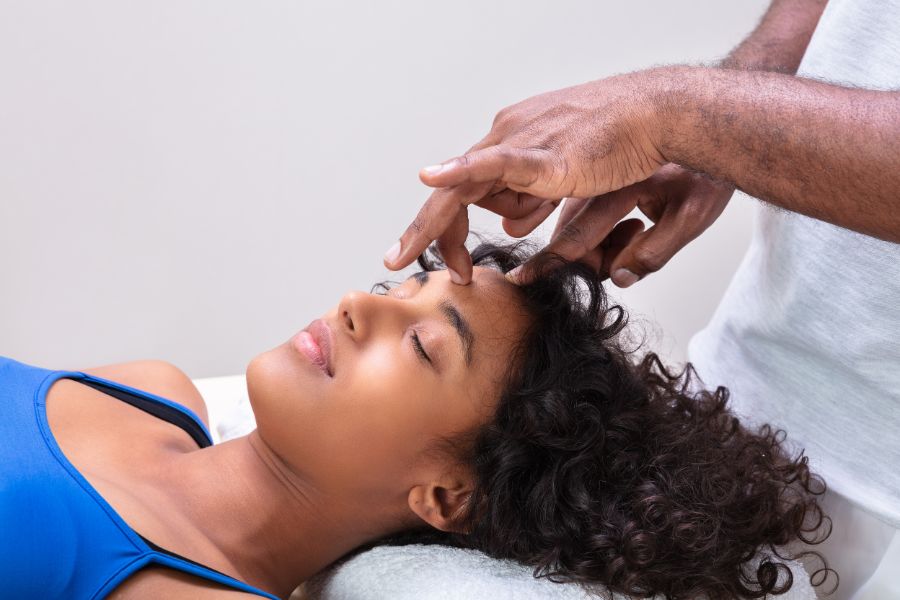
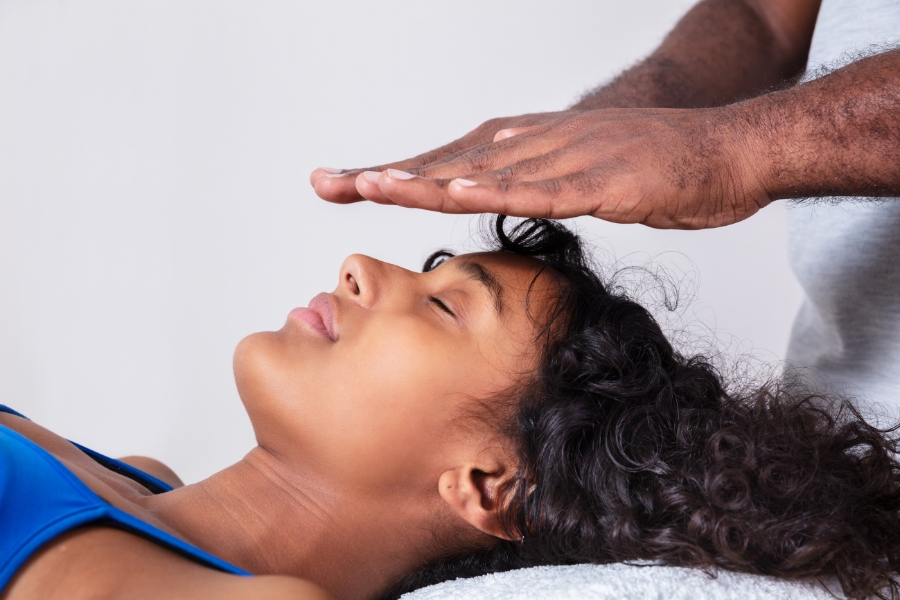
During the session, the practitioner may place their hands lightly on your body or hold them just above your body. There is no manipulation, massage, pressure, or physical adjustment.
And because Reiki involves very little physical contact, many people find it particularly approachable when they feel tired, sensitive, overwhelmed, or emotionally worn down.
People experience Reiki in different ways, as some feel warmth or tingling, some feel a sense of heaviness, as if the body is ready to rest, some notice emotions coming up, and others simply feel calm or settled during and after the session.
All things considered, there is no right way to experience Reiki.
The purpose is not to force a result. It’s to create a supportive environment where your body and mind can become more settled.
For people dealing with prolonged stress, grief, caregiving demands, recovery, or major life changes, that sense of stillness can be very helpful.
However, Reiki should not be presented as a cure for medical conditions.
It’s better understood as a supportive wellness practice that may help you feel calmer, more centered, and better able to rest.
Why Relaxation Therapies Are Important for Whole-Body Wellness
Relaxation is often treated as optional, but the body does not function well when it stays in a stressed state for too long.
When stress continues day after day, people may notice changes in sleep, digestion, mood, focus, muscle tension, and energy.
What’s more, they may feel more reactive, more tired, or less able to recover from normal demands.
These are all signs that your nervous system needs time to settle, and Reiki and reflexology can support that process by creating structured time for rest.
For many people, a session is one of the few moments in the week when they’re not solving problems, answering messages, caring for someone else, or pushing through discomfort.
And that’s important because wellness isn’t only about treating symptoms after they become disruptive. Whole-body wellness also includes noticing how your body responds to stress, how well you recover, and whether you have regular ways to support relaxation.
A whole-person approach considers physical comfort, emotional strain, lifestyle, sleep, stress, and your overall sense of well-being.
All in all, your body deserves to be understood as a connected system, and Reiki and reflexology can fit into that view because they give attention to rest, regulation, and body awareness.
How Reiki and Reflexology Differ From Medical Treatments
Medical treatments diagnose, treat, or manage specific health conditions. They may involve testing, medication, procedures, therapy, or other forms of clinical care.
But Reiki and reflexology are not medical treatments.
They do not replace a physical exam, lab work, imaging, medication, or follow-up with a qualified health-care provider.
Moreover, you shouldn’t use Reiki or reflexology instead of seeking medical care for pain, new symptoms, illness, injury, or a health condition that needs attention.
But these supportive therapies can still have a place in your wellness routine, as they may help you feel calmer, more rested, more aware of your body, and better supported during stressful periods.
What to Expect During Your Session
If you’ve never tried Reiki or reflexology before, it’s normal to wonder what the session will feel like.
For reflexology, you typically remain clothed while the practitioner works on your feet, hands, or ears.
You may be seated or lying down while the practitioner uses targeted pressure, and you should be able to speak up if the pressure feels too strong or if you need an adjustment.
For Reiki, you also remain clothed, and you may lie on a treatment table or sit in a comfortable chair.
The practitioner may use light touch or place their hands near your body, but the session is gentle and doesn’t require you to talk, explain your stress, or know exactly what you’re supposed to feel.
You can also share whether you prefer less pressure, more explanation, or a session with minimal conversation.
In any case, a good session should feel respectful, comfortable, and guided by your needs.
Who Can Benefit From Reiki and Reflexology?
People are often drawn to Reiki and reflexology when they feel stressed, tense, depleted, or out of balance.
This may include busy professionals, caregivers, people going through emotional strain, people recovering from a difficult situation, or anyone who feels as though their body is carrying too much stress.
Some people choose these therapies because they want a gentle complement to their wellness routine, while others want support that feels less clinical than a medical visit, but still thoughtful and intentional.
Reiki and reflexology may also appeal to people who have a hard time slowing down, as a scheduled session creates space to rest without needing to be productive.
And remember, these therapies are not right for every situation.
If you have new symptoms, severe pain, a medical diagnosis, or concerns about your health, you should speak with a qualified health-care provider.
All things considered, Reiki and reflexology are gentle ways to support relaxation, body awareness, and whole-body balance.
They don’t replace medical care, but they may help create space for rest during times that are especially stressful or demanding.
If you’re looking for a gentle way to support stress relief and whole-body balance, reflexology or Reiki could be just what you need.
Book a consultation today to start restoring calm and balance in your life.